.png)
What Does the Future of AI in Sales Operations Look Like in 2026 and Beyond?
The function of Sales Operations has been transformed over a matter of years. Formerly characterized by pipeline tracking by hand, CRM notifications, and process control, Sales Ops in 2024 is already driven by AI solutions that automate lead scoring, optimize outreach efforts, and predict pipelines with accuracy that is still surprising to some.
As recent benchmarks show, over 60% of sales teams now leverage some form of AI, and the rate of adoption is accelerating as AI-native platforms are redefining outbound strategy.
But how will this landscape be in 2026 and beyond? Look for autonomous prospecting, hyper-personalized campaigns at scale, and generative AI agents managing multi-step workflows across the revenue stack. The future Sales Ops leader won't simply oversee systems—she'll craft, track, and tune an AI-fueled growth engine.
Looking to future-proof your sales organization with AI? See how OneShot.ai automates today's outbound prospecting.
How Will AI Sales Operations Evolve by 2026?
What are the key AI-driven transformations in sales operations today that are shaping the future?
In 2024, the groundwork has already been laid:
Sales Ops teams can now justify proactive resource allocation instead of continuing reactive resource allocation based on forecasting using predictive AI.
Lead scoring and prioritization are now automatic. With the help of enrichment data, eliminate guesswork and manual checks.
Personalization at scale is now at the fingertips. AI-driven outreach tools personalize messaging based on persona, behavior, and timing.
Platforms like OneShot.ai are leading this effort to scale, automating outreach on a persona basis and email insights for higher conversion rates.
What sales ops processes are expected to be fully autonomous by 2026?
We are transitioning from assisted AI (tools that suggest next steps) to autonomous AI (workflows that function independently of human involvement).
By 2026, you can expect the following:
- Outbound prospecting automation: AI agents will identify, qualify, and engage leads.
- CRM upkeep: Updating, cleansing, and duplicate elimination will occur in real time.
- Persona cloning: AI will replicate successful outreach strategies across similar buyer personas.
Humans will continue to be important for oversight, creative strategy, and relationship building, but machines will be responsible for executing those routines.
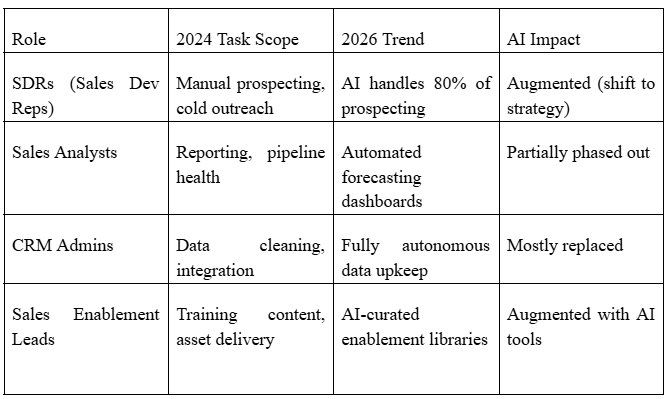
Which existing Sales Ops roles will be augmented or phased out due to AI?
Want to future-proof your sales team with AI? Explore how OneShot.ai automates outbound prospecting today.
What are the Top AI Sales Ops Trends to Watch in 2026 and beyond?
Will outbound lead generation become entirely AI-driven?
Outbound prospecting will be nearly completely AI-driven by 2026. But SDRs won't be gone—they'll be AI operators and relationship strategists. Human judgment will hone stories, regulate for compliance, and handle sophisticated negotiations.
How is predictive intent data reshaping how we source and qualify leads?
Predictive intent data already signals buying readiness by tracking digital behavior. AI can enrich these signals with firmographic, technographic, and behavioral insights. Tools like Demandbase, ZoomInfo, and OneShot.ai’s Insight Agent enable teams to strike earlier in the buyer journey.
What is hyper-personalization at scale, and how will AI make it standard by 2026?
Hyper-personalization means tailoring every outreach—subject lines, content, timing—based on buyer-specific data. In 2026, this won’t be a “premium feature” but the new baseline standard.
Generative AI will enable:
- Custom narratives at volume (no two emails are identical)
- Persona-based messaging adjusted for industries or job roles.
- Real-time personalization triggered by buyer signals
- OneShot.ai’s Personalization Agent is already pioneering this capability.
How is AI improving sales enablement and messaging precision?
AI now drives:
- Real-time evolving enablement asset libraries.
- Buyer keyword insights that inform reps on messaging timing and tone.
- Dynamic battlecards revealed in the middle of the call.
In 2026, hyper-personalized outreach will be the new standard. Be prepared—discover OneShot.ai's Personalization Agent.
What Role Will Generative AI Agents Play in Next-Gen Sales Operations?
What are AI agent frameworks, and how will they orchestrate Sales Ops workflows in the future?
By the year 2026, Sales Ops will go beyond merely having access to tools-they will be utilizing AI agents to seamlessly provide workflow orchestration.
- Insight Agent --> signals identification, lead prioritization
- Personalization Agent --> custom outreach messaging
- Integration Agent --> handoffs to CRMs and sequencers
These common frameworks can encompass multi-step orchestration. Where identification of intent to clone personas to generate personalized messaging for outreach is executed.
How do AI agents collaborate across the revenue stack?
Future AI agents are additionally no longer going to work in silos. They can be integrated into the HubSpot, Outreach, Apollo, and Slack workflows. OneShot.ai recently launched an Integration Agent that connects your data and messaging/delivery platforms seamlessly.
Can Sales Ops scale without sacrificing personalization by 2026?
Yes-with AI agents, they can allow for programs that are able to maintain outbound velocity with quality. The balancing act of scale vs. maintaining the human touch is addressed through orchestration-type frameworks, like OneShot.ai Scaling Agent, that can maintain that authentic feeling of communication at scale.
What Are the Challenges of AI-Driven Sales Ops and How Can Teams Address Them?
Will AI introduce data hallucination risks or personalization errors in large-scale campaigns?
Yes. Generative models can misread data or make up information. Mitigation measures are:
- Human-in-the-loop validation
- Guardrails for vetted messaging templates
- Ongoing monitoring of campaign outputs
What legal and ethical challenges will AI face in Sales Ops by 2026?
AI prospecting poses significant compliance issues. Main guidelines are:
- Legal Guidelines for AI Prospecting
- The collection of data consent must be transparent.
- AI needs to reveal sources of data on questioning.
- Sensitive information (health, finance) needs opt-in compliance.
- EU/US data regulations (GDPR, CCPA) require more stringent oversight.
How can Sales Ops leaders prepare and reskill their teams for an AI-first era?
Upskill SDRs to become AI operators—educating them in prompt engineering and campaign validation.
Incorporate change management so that adoption does not encounter resistance.
Train leaders to track AI performance using new KPIs (not vanity metrics alone).
AI won't displace your Sales Ops team—but teams leveraging AI will outperform their non-AI counterparts. Refine your sales infrastructure with OneShot.ai.

What Industries and Business Models Will Benefit the Most from AI Sales Ops?
What B2B sectors will see the highest ROI?
Industries that possess longer and more complex sales cycles see the greatest value:
- Tech & SaaS: high speed and high touch
- Medtech & Pharma: regulation-based outreach
- Manufacturing: multi-stakeholder committee outreach
- Financial Services: prioritizing accounts based on intent
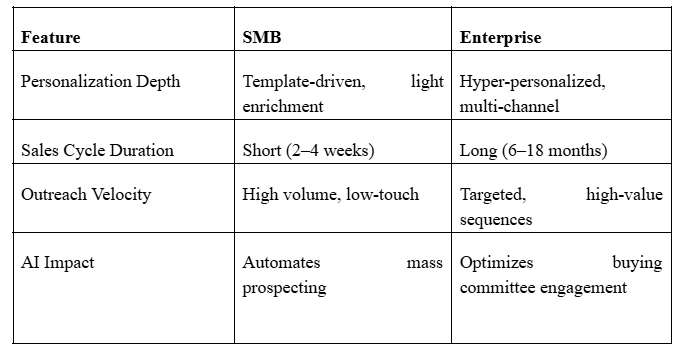
How does AI impact sales cycles in SMB vs enterprise sales?
What’s the role of AI in ABM strategies post-2026?
- Account-Based Marketing will be redefined by AI through:
- Signal mapping among buying committees
- Targeted persona-based engagement from previous account success
- Tone of voice outreach closely aligning with engagement for C-suite vs. mid-level role, or other role-targeted outreach
OneShot.ai’s Persona Agent perfectly embodies this future by cloning effective engagement models from accounts or other accounts.
How Can Sales Ops Teams Stay Ahead of AI Disruption Through 2030?
What new skills and mindsets will define successful Sales Ops professionals?
Leaders of sales ops in the future will be orchestrators of AI-fueled growth machines. Prompt engineering will be a key skill, assisting teams in defining AI outputs as accurate, on-brand, and conversion-focused.
They'll also require AI stack literacy—the knowledge of how CRMs, sequencing platforms, and AI agents interact. Equally critical is systems wrangling, or workflow optimization across tools to maintain the flow of data. These will be the skills that differentiate AI-ready professionals from manual process-conscious ones.
What KPIs will be most relevant in AI-augmented Sales Ops?
Classic metrics, such as emails or calls made, will be of much less importance by 2026. Teams will instead concentrate on KPIs that reflect effectiveness and accuracy.
Depth of personalization will gauge the level of personalized outreach quality. Conversion velocity of outreach will measure how rapidly prospects transition from first touch to engagement. And AI attribution accuracy will connect closed deals to AI activity, providing transparent visibility into ROI.
How do orgs create an agile, AI-ready sales tech stack today?
There is no need to upend everything at once—the trick is layering AI onto current systems. Sequencing tools such as Apollo and Outreach handle campaign delivery, while CRMs like HubSpot and Salesforce continue to form the backbone.
The true leap ahead is achieved with AI agents such as OneShot.ai that manage prospecting, personalization, and platform integration. When these tools are brought together, Sales Ops teams can remain agile and ready for the AI-first era.
FAQs
1. What is the future of AI in sales operations?
The future of AI in sales ops lies in end-to-end automation, predictive decision-making, and real-time revenue intelligence. AI will increasingly manage forecasting, pipeline health, territory planning, and performance optimization, allowing sales teams to focus more on strategy and relationships.
2. How will Salesforce evolve in the next 5–10 years?
Salesforce is expected to become more AI-native, with deeper automation, autonomous agents, and predictive insights embedded directly into workflows. Future Salesforce platforms will likely emphasize AI copilots, intent-driven actions, and unified data clouds to support sales ops at scale.
3. What are the key AI sales ops trends for 2026?
Key trends include AI-powered revenue forecasting, autonomous sales agents, real-time deal risk alerts, advanced intent modeling, and AI-driven CRM optimization. Sales ops teams will rely more on AI for scenario planning and performance management.
4. How will AI impact sales forecasting and revenue planning?
AI will significantly improve forecasting accuracy by analyzing historical data, buyer behavior, market signals, and pipeline patterns. This allows sales ops teams to move from reactive reporting to predictive and prescriptive planning.